A Complete Guide to Correctly Applying Car Decals: Temperature and Practical Tips
Car decals are one of the best ways to personalize your vehicle, both for aesthetic reasons and to promote your brand or business. However, to achieve a long-lasting, flawless result, it's essential to follow some guidelines for proper application, especially considering the influence of temperature. Here are some practical tips for applying decals, focusing specifically on environmental conditions and their importance.
1. Surface Preparation: Cleaning First
Before starting the application, the body surface must be clean and dry . Here are the main steps:
- Wash the area with a neutral detergent, avoiding oil-based substances.
- Dry the surface with a clean, lint-free cloth.
- Wipe down with an alcohol-based cleaner to remove any wax or silicone residue that may compromise adhesion.
A clean surface ensures optimal adhesion, avoiding air bubbles and defects.
2. Importance of Temperature in the Application
Temperature plays a crucial role in ensuring the adhesive bonds properly and securely. Here's why:
-
Ideal Temperatures: The optimal temperature for applying stickers is between 18°C and 25°C . Under these conditions, the adhesive reaches its maximum adhesion and the glue can effectively bond to the car's surface.
-
Temperatures Too High: If the temperature exceeds 30°C , the adhesive may become too soft and lose its adhesion. This can cause air bubbles and warping. Additionally, the adhesive may begin to slip, making precise application difficult.
-
Too Low Temperatures: Temperatures below 10°C are not ideal for applying stickers. Cold temperatures make the glue less sticky and stiffer, reducing adhesion and making the sticker more brittle. Under these conditions, the sticker may peel off easily or the film may crack.
-
Humidity: High humidity can also affect the quality of the application. When the air is too humid, the adhesive has trouble drying properly, which can lead to adhesion problems and reduce the durability of the result.
3. Application Process: Step-by-Step
By following these steps, you can get a perfect application:
-
Measurement and Positioning: Place the sticker on a clean, dry surface to determine the application area. Use tape to temporarily secure it in the desired location.
-
Removing the Film: Gently peel off the backing film of the sticker, being careful not to touch the glue with your fingers.
-
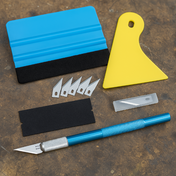
Applying with a Spatula: Use a soft spatula or credit card to apply the sticker, starting from one side and working toward the other, eliminating any air bubbles. Proceed slowly and carefully.
-
Removing the Top Film: If your sticker has a protective film on top, wait a few minutes and then gently remove it to prevent the sticker from peeling off.
4. Tips for a Longer Life
-
Complete Drying: Leave the car indoors for a few hours after application to allow the glue to set.
-
Avoid Car Wash: Do not wash your car for at least 24-48 hours after application to allow the sticker to set perfectly.
-
Sticker Maintenance: Clean the sticker only with non-abrasive products and warm water, avoiding aggressive detergents that could compromise its durability.
5. Effect of Temperature on Adhesive Durability
Prolonged exposure to extreme temperatures, whether hot or cold, can reduce the lifespan of the adhesive over time. During periods of extreme heat, UV rays and intense sunlight can cause the colors to fade, while prolonged cold can make the material more brittle and prone to cracking. For this reason, parking in covered areas, such as garages or shaded parking lots, helps preserve the quality of the adhesive.
Conclusions
By following these guidelines, you can achieve a professional and long-lasting application of car decals. Remember to pay attention to the temperature and cleanliness of the surface before application. Proper preparation, an ideal ambient temperature, and proper maintenance will ensure your decal stays intact and vibrant for a long time. Happy applying and... have fun customizing your car!